
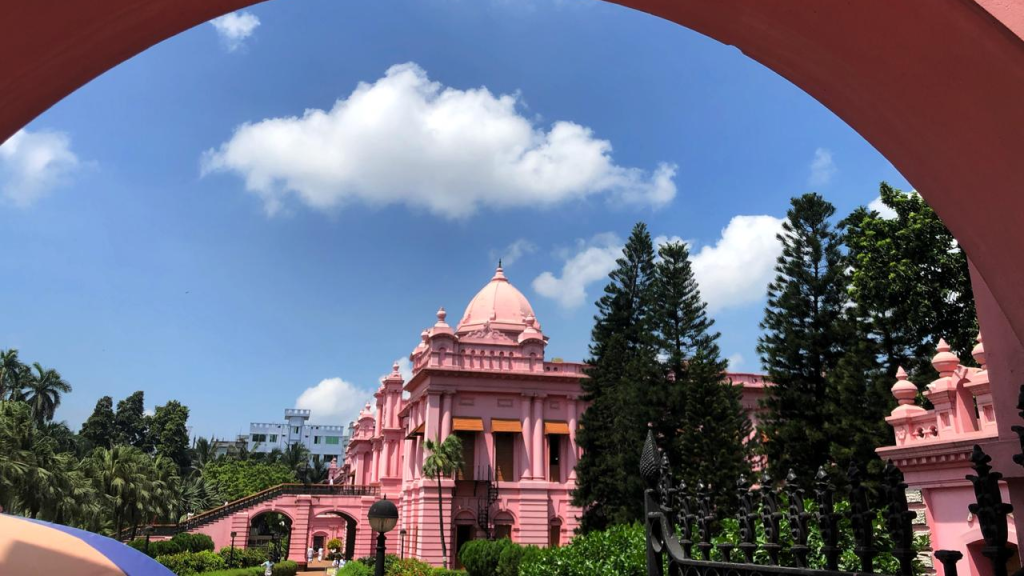
Ahsan Manzil is one of the most famous historical landmarks in Bangladesh, standing proudly on the banks of the Buriganga River in Old Dhaka. Popularly known as the “Pink Palace”, this magnificent building represents the rich cultural, political, and architectural heritage of the country.
A Glimpse into History
Ahsan Manzil was originally built in the mid-19th century by Nawab Abdul Ghani and later named after his son Nawab Khwaja Ahsanullah. During the British colonial period, it served as the official residence and seat of power of the Nawabs of Dhaka, who played a significant role in the social and political life of Bengal.
Over the years, the palace witnessed many important historical events, including meetings, celebrations, and political discussions that shaped the region’s future.
Architectural Beauty
The palace is an outstanding example of Indo-Saracenic architecture, blending Mughal, European, and local styles. Its most striking feature is the large central dome, surrounded by elegant arches, balconies, and symmetrical structures. The soft pink color of the building gives Ahsan Manzil its iconic identity and makes it instantly recognizable.
The interior of the palace is equally impressive, with spacious halls, high ceilings, and artistic details that reflect the luxurious lifestyle of the Nawabs.
From Palace to Museum
After years of neglect and damage, including severe destruction caused by floods and earthquakes, Ahsan Manzil was restored by the Government of Bangladesh. In 1992, it was officially opened as the Ahsan Manzil Museum.
Today, the museum displays:
-
Personal belongings of the Nawabs
-
Antique furniture and decorative items
-
Historical photographs and documents
-
Exhibits showcasing the lifestyle and legacy of Dhaka’s Nawab family
Cultural and Tourist Importance
Ahsan Manzil is not just a historical monument—it is a symbol of Dhaka’s identity. It attracts thousands of local and international tourists every year and is a favorite spot for students, history lovers, and photographers.
The palace also helps preserve the memory of Old Dhaka’s glorious past and educates new generations about Bangladesh’s heritage.
Conclusion
Ahsan Manzil stands as a timeless reminder of Bangladesh’s rich history and cultural pride. Whether you are visiting Dhaka for the first time or exploring your own roots, a visit to this iconic Pink Palace offers a fascinating journey into the past.